Showing posts with label General Science. Show all posts

Ten Killer Diseases of Women


Like men, women are also continuously exposed to threats to their health. These threats are mostly related to her diet and working environment. Many of these threats are what we call as silent killers as they attack women’s health in a very discrete and slow way. In most cases, it takes long medication to finally be free from these diseases.

So what are the most threatening diseases to women? What are the causes and ways to fight them? Here are the ten most common but dangerous diseases of women. 

Heart diseases. Contrary to common beliefs, heart disease is not only men’s thing. It kills more people around the world than other diseases. Over the years, there is increasing number of women who died of this disease. Women above 50 are the most prone to these diseases. Accordingly, 27.2% of women’s death is caused by heart diseases.


Smoking (or exposure to secondhand smoke from tobacco and nicotine-based products), too much drinking and unhealthy diet are the main causes of heart diseases. In order to prevent or fight this disease, it is advised to include vegetables, fruits, whole grains, high-fiber food and lean source of meat in the diet. Foods high in saturated fats and sodium shall also be limited, if not avoided. Women should also engage in physical activities in their daily routines, say aerobic exercises, and find ways to effectively manage everyday stress.


Why Do We Forget Our Dreams?

In the middle of a good night’s sleep, you dream of beautiful things. But sometimes, it would be of terrible things and tragic events. And when you wake up, you find yourself remembering only glimpses of what you have dreamed of….

This scenario is common to everyone. We wake up, forgetting most of our dreams but knowing we have dreamed about this and that and more. No matter how much we push our brain cells, they can only revive small clips of those dreams. So why do we mostly forget our dreams? Is this common?


According to Scientific American (as cited by care2.com), we have five dreams each night on average, totaling 1,825 dreams per year. Of these figure, we forget most of them. For Mark Balgrove, professor of psychology at Swansea University, people differ in their ability to remember dreams. However, if we translate them from short-term to long term memory immediately upon walking, chances are we can really put these dreams to better perspective. In other words, let us try to consolidate the things we remember right after waking up, may be by writing them down, to make sense of these dreams. Accordingly, half of our dreams are forgotten within five minutes of walking, and within ten minutes, 90% is gone.

Rest the rest of "Why Do We Forget Our Dreams?".


Image courtesy of Josephine Wall.

Hydroponics: Concepts and Methods


Hydroponics is one of the many methods of soilless agriculture through which plants are grown using mineral nutrient solutions in water, without soil. Many commodity crops like tomatoes, onions, lettuce and cabbage have been successfully cultivated through hydroponics, and their produce well-accepted in many markets. The theory behind the method is that the soil is only a mineral nutrient reservoir and hence, it is not very essential to plant growth. The mineral nutrient can be introduced into a plant’s water supply artificially which is then readily absorbed by the plant’s root. The concept of hydroponics is significant in today’s world as it contributes to the growing concern for steadier food supply, as well as the reduction of suitable arable land for agriculture.
 

Marvelous Animal Robots II

Animals have certain unique abilities that humans cannot do. These abilities have been proven to be of valuable use to everyday human activities. Hence, human duplicates them by creating robots. Over the years, several robots have been designed and fabricated by engineers, scientists, and researchers. I have previously featured three amazing animal robots (see Marvelous Animal Robots). Here is the second list of three marvelous and awe-inspiring animal robots.

AirJelly

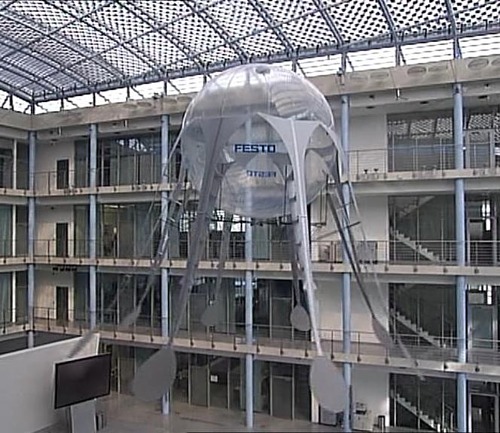
The AirJelly is the first indoor flight object with peristaltic drive. It is created by the German firm Festo. The robot is similar to the AquaJelly, another creation of the company. Unlike the AquaJelly, the AirJelly swims through the air, instead in the water. Its head and entire body is a huge ballonet filled with helium, making it float on air. The diameter of the ballonet is 1.35 meters, yielding a volume of 1.3 cubic meters of helium. For it to be lifted, the robot is at least 1.3 kilograms. (image source)


The AirJelly is equipped with a central electric drive unit and an intelligent, adaptive mechanism. It is moved by two lithium-ion polymer batteries connected to the central electric drive unit. From here, power is transmitted to a bevel gear which is connected to eight spur gears that move the eight tentacles of the jellyfish via cranks. The movement created in the tentacles, called as peristaltic motion, propels the ballonet forward. The movement or propulsion based on the principle of recoil is a new concept. This is what moves the AirJelly through the air.

SmartBird

One of the latest creations from Festo is the SmartBird. This is a great breakthrough in man’s efforts to decipher the flight of birds. The SmartBird is an ultralight but powerful flight model with excellent aerodynamic qualities and agility. It weighs only 450 g (15.87 oz) and has a wingspan of 1.96 m (6.4 ft). (image source)

 
Inspired by the herring gull, the SmartBird can start, fly and land autonomously. Its wings beat up and down, as well as twist at specific angles. The mechanism employed is an active articulated torsional drive unit combined with a complex control system. Its direction is controlled by the interaction of the electric motors found in its head and torso sections. Like that in true birds, the SmartBird’s tail produces lift and functions as both pitch elevator and yaw rudder. The battery, engine and transmission, crank transmission, and control and regulation electronics are also found inside the robot’s torso.

Genibo

Genibo is a robotic dog created by the Korean company of Dasarobot of Dasatech. It is similar in concept to Sony’s Aibo. It stands a foot tall and weighs 3.3 pounds. It is equipped with sensors, camera, and voice commands which enable it to identify itself and share “feeling” with its users.  It is capable of understanding over 100 voice commands such as “sit”, “roll over”, and “come here.” It can also change its mood according to user interaction, such as happiness, sadness, anger, and sleepiness. (image source)


Follow "Marvelous Animal Robots II" at Triond.

“The Dead Sea Spits Out Asphalt” and Other Fun Facts about the Dead Sea


Bordering the countries of Jordan and Israel and the controversial West Bank, the Dead Sea is one of the most popular landlocked lakes in the world. This lake is known for its numerous unique characteristics. Here are some fun facts about the Dead Sea:

  • The Dead Sea is also known as the Salt Sea. Its Hebrew name is Yām ha-Melaḥ, meaning “sea of salt.”
  • The Dead Sea is the location of the Biblical cities of Sodom and Gomorra.
  • At 423 meters or 1,388 feet, the surface and shores of the Dead Sea is the lowest elevation on the Earth’s surface.
  • The Dead Sea is also the world’s deepest hypersaline lake at 377 meters or 1,237 feet deep.
  • Its salinity level is at 33.7%, making it one of the saltiest bodies of water in the world.  Other lakes like Lake Assal (Djibouti) and McMurdo Dry Valleys (Antarctica) have higher salinities than the Dead Sea.
  • The Dead Sea is named such because no animals can flourish in it. It is 8.6 times saltier than the ocean, and in this very harsh environment, animals cannot survive.
  • Only select quantities of bacteria and microbial fungi can live in its waters.
  • The mineral content of the Dead Sea differs from that of ocean water. There are around 14.4% calcium chloride, 4.4% potassium chloride, 50.8% magnesium chloride, and 30.4% sodium chloride. For most seas and oceans, sodium chloride is at 97% level.
  • Along the southwestern side of the lake is a 210 m (700 ft) tall halite (or salt) formation called "Mount Sodom".
  • The Dead Sea has a density of 1.24 kg/L, making swimming similar to floating. It is natural buoyancy that makes floating in the lake a lot easier.
  • The Jordan River is its only major water source. There are small springs under and around it which create pools and quicksand pits. The Dead Sea has no outlet streams.
  • During the winter, its water temperature tends to be higher than land temperature, and the reverse during the summer months. This is due to the water’s mass and specific heat capacity. On average, there are 192 days above 30OC or 86OF annually.
  • The Dead Sea constantly discharges asphalt, a feature very unusual to any lake. It spits up small pebbles of the black substance from its deep cracks. Asphalt coated figurines and bitumen coated Neolithic skulls from archaeological sites have been found. It is believed that this asphalt had been used to mummify Egyptians.
  • It is one of the world’s first health resorts, dedicated for Herod the Great.
  • The Dead Sea is a popular center for climatotherapy (treatment using climatic features like temperature, humidity, sunshine, and pressure), heliotherapy (treatment using the biological effect of the sun’s radiation) and thalassotherapy (treatment through bathing in the lake’s water). Specifically, it has treatment centers for psoriasis, rhinosinusitis, and osteoarthritis.
Read "The Dead Sea Spits Out Asphalt” and Other Fun Facts about the Dead Sea at Triond

World’s Critically Endangered Spiders

Spiders may be one of the most prolific creatures in the world. Despite this ability to repopulate rapidly, some species of spiders have been identified as critically endangered by the International Union for Conservation of Nature or IUCN. Creatures under this category face higher risk of extinction than those under endangered category.

There are several species of spiders classified as endangered, but there are only two as critically endangered. These two spiders belong to the genus Poecilotheria which is actually a group of arboreal tarantula. The name is derived from Greek “poikilos”, meaning spotted, and “therion”, meaning wild beast. These tarantulas are known for their vivid color patterns, fast movement, and potent venom compared to other tarantulas. They are native to Sri Lanka and India.

Specifically, the two species are P. metallica and P. hanumavilasumica. Here are some descriptions of these two spiders.

Gooty Sapphire

Under scientifically as Poecilotheria metallica, the Gooty Sapphire is a species of tarantula with metallic blue color. It has other names like Gooth Sapphire Ornamental Tree Spider, Metallic Tarantula, Peacock Parachute Spider, Peacock Tarantula, Salepurgu.  It has an intricate fractal-like pattern on its abdomen. It measures between 6-8 inches when fully grown.  It is native in Southeastern India and Sri Lanka. The spider was first discovered in the town of Gooty in central southern India, hence, its name. (image source)

Like other tarantulas, Gooty spiders live in holes of tall trees where they make their funnel web. Their diet consists of various flying insects which they catch manually and not in the web. Although there have been no recorded human death from the tarantula bite, the venom of this spider may cause intense pain, and thus, could be medically significant. They can move rapidly and defend themselves when cornered. (image source)
 

These spiders have high price, with adults sometimes pricing above $500 in the USA. Prices can vary in other locations, particularly Europe. Gender also affects the price as females live longer (about 12 years) than males (about 3-4 years).

Rameshwaram Ornamental

Otherwise known as Rameshwaram Parachute Spider, the Rameshwaram Ornamental (scientific name: Poecilotheria hanumavilasumica) was first discovered in 2004 by Andrew Smith in a sacred grove of the Hanumavilasum Temple on Rameshwaram Island. There were several misidentifications of this spider earlier. (image source)

The Critically Endangered status of the spider is due to restricted distribution, and continuing decline in area, quality, populations and mature individuals. There are eight subpopulations have in 13 severely fragmented locations, which 4 to 78 individuals per area. As these spiders prefer to inhabit tamarind trees, the densities are high in some tamarind plantations compared to casuarina or palm plantations. (image source)

Read "World’s Critically Endangered Spiders" at Triond.

Why Birds Fly in V Formation


We often see flocks of birds flying across the sky. They are usually the migratory kinds which traverse over cities, countries, and oceans around the world in a definite pattern. One of the unique characteristics of this collective flying is its shape and orientation – the “V” formation. So why do birds fly in V formation? What benefits do they derive from flying in such way? What is the science behind this?
Scientists have found that the main reason for this flight formation is to reduce the effect of drag force. Drag force, or force created by movement or friction between two surfaces, is minimized when birds are flying together than when they are alone. In some studies conducted, it is reported that a flock of 25 birds in V formation can fly 71% farther than a bird could do on its own with the same amount of energy. This also reduces the drag force by up to 65%.

Moreover, birds also properly space themselves apart from each other. In this way, they optimize the reduction of drag force that every individual experiences. However, logic tells us that the bird flying in the lead and in the end would experience the greatest drag force since they are the ones to push through the current of air. There may seem to be no equal benefits for all the birds since the individual in the lead position would have to work the hardest.  So how do birds prevent draining the energy of the lead bird?


The answer is simple: the birds switch positions. When the bird at the lead position gets exhausted, it will fall father back into one of the lines of V and will be replaced by another bird from farther back. The two birds flying at the extreme ends of the formation also get tired faster than those in the middle, so the positions keep rotating among birds. There is a timely cyclical fashion of flying so as to spread the flight fatigue among all the flock members. Hence, each bird is given a chance to become the leader and be responsible for the group, or just be in the middle to enjoy the comfort. Overall, the V formation can greatly boosts the efficiency of flying birds.

Lastly, the V formation provides a means of communication and visual monitoring for the birds. It aids them in getting better view of each other. This enables them to spot any missing bird, as well as preventing any one of them from straying away from the flock.

Considering all this, humans can learn from the teamwork and reliability that birds offer each other during their flight. So V formation is not just any random act of flying, but a wise and analytical strategy that the birds have first learned and done.

Sources:
Read "Why Birds Fly in V Formation" at Factoidz.

Ten Marvelous Land Cliffs in the World

The world is simply full of wonders. Some of its awe-inspiring beauties are its high and rugged cliffs. Depending on location, cliffs are either found on land and sea. I have featured before some of the world’s amazing sea cliffs (see Ten Marvelous Sea Cliffs in the World). Overlooking the ocean water, sea cliffs are truly breathtaking. However, land cliffs are as beautiful and awesome as well. These cliffs may be faces of great mountains or just lie isolated on a vast plain. Some are locations of great falls, rivers, and natural parks, and even sites for extreme activities. Wherever they are, they certainly overwhelm anyone with wonder and joy.

Here is a short list of ten marvelous land cliffs in the world.

Trango Towers

The Trango Towers are composed of granite spires located on the north side of the Baltoro Glacier, in Baltistan, Pakistan. They are part of the Karakoram range – a division of the Himalaya Range where many of the world’s highest peaks are found. Their vertical faces are the world’s tallest cliffs. The highest point in this group of dramatic cliffs is the summit of Great Trango Tower, rising at 6,286 m (20,680 ft). Smaller cliffs are named Trango Tower or “Nameless Tower”, Trango Monk, Trango II, Trango Ri, Trango Pulpit, and Trango Castle.  The Towers offer some of the most challenging rock climbing in the world. (image source)

Tre Cime di Lavaredo

The Tre Cime di Lavaredo are part of the six mountaineering heights known as Great north faces of the Alps. The name is Italian for “three peaks of Lavaredo.” They are also called Drei Zinnen in German which means “three merlons.” The group is composed of three distinctive battlement-like peaks in the Sexten Dolomites of northeastern Italy. The cliffs are named Cima Piccola (“little peak”), Cima Grande (“big peak”), and Cima Ovest (“western peak”). Their elevations measure 2,857 m (9,373 ft), 2,999 m (9,839 ft), and 2,973 m (9,754 ft), respectively. (image source)

Kjerag


Kjerag or Kiragg is a mountain located in Lysefjorden, in Forsand municipality, Ryfylke, Rogaland, Norway. Its name is a compound of the words “kid” and “goat’s hair” because the rough surface of the mountainside has been compared with the shaggy hair of a kid goat. Its highest point is 1,110 m above sea level, but its northern drop to Lysefjorden (measuring 984 m or 3,228 ft) is the most popular attraction. (image source)

Another great attraction of the mountain is the Kjeragbolten, a 5 m3 boulder wedged in the mountain crevasse. It is possible to walk over the rock without any equipment. However, there is a direct 241 m drop below and then another tumble of 735 m down to Lysefjorden. So anyone who wishes to cross over the boulder must have lots of guts (and steady feet). (image source)

Mount Thor

Mount Thor or Thor Peak is a mountain measuring 1,675 m (5,495 ft) high, found in Auyuittuq National Park, on Baffin Island, Nunavut, Canada. Made of granite, Mount Thor is part of the Baffin Mountains which is in turn part of the Arctic Cordillera mountain range. The mountain features the Earth’s greatest purely vertical drop at 1,250 m (4,101 ft) with an average angle of 105 degrees. This makes it a popular site among climbers. In July 23, 2006, the world record for longest rappel was set on Mount Thor by an American team. (image source)
 

Mount Asgard

Located in Auyuittuq National Park, on the Cumberland Peninsula of Baffin Island, Nunavut, Canada, Mount Asgard is a twin peaked mountain with two flat-topped cylindrical rock towers separated by a saddle. It is named after the Norse god Asgard. It has an elevation of 2,015 m (6,611 ft) and is granite in composition.  Its North Peak is slightly higher than South Peak. Mount Asgard is perhaps the most famous of the Baffin Mountains.  In 1976, a stuntman skied off the mountain with a Union Flag parachute for the opening sequence of the James Bond film “The Spy Who Loved Me.” (image source)
 
Shiprock

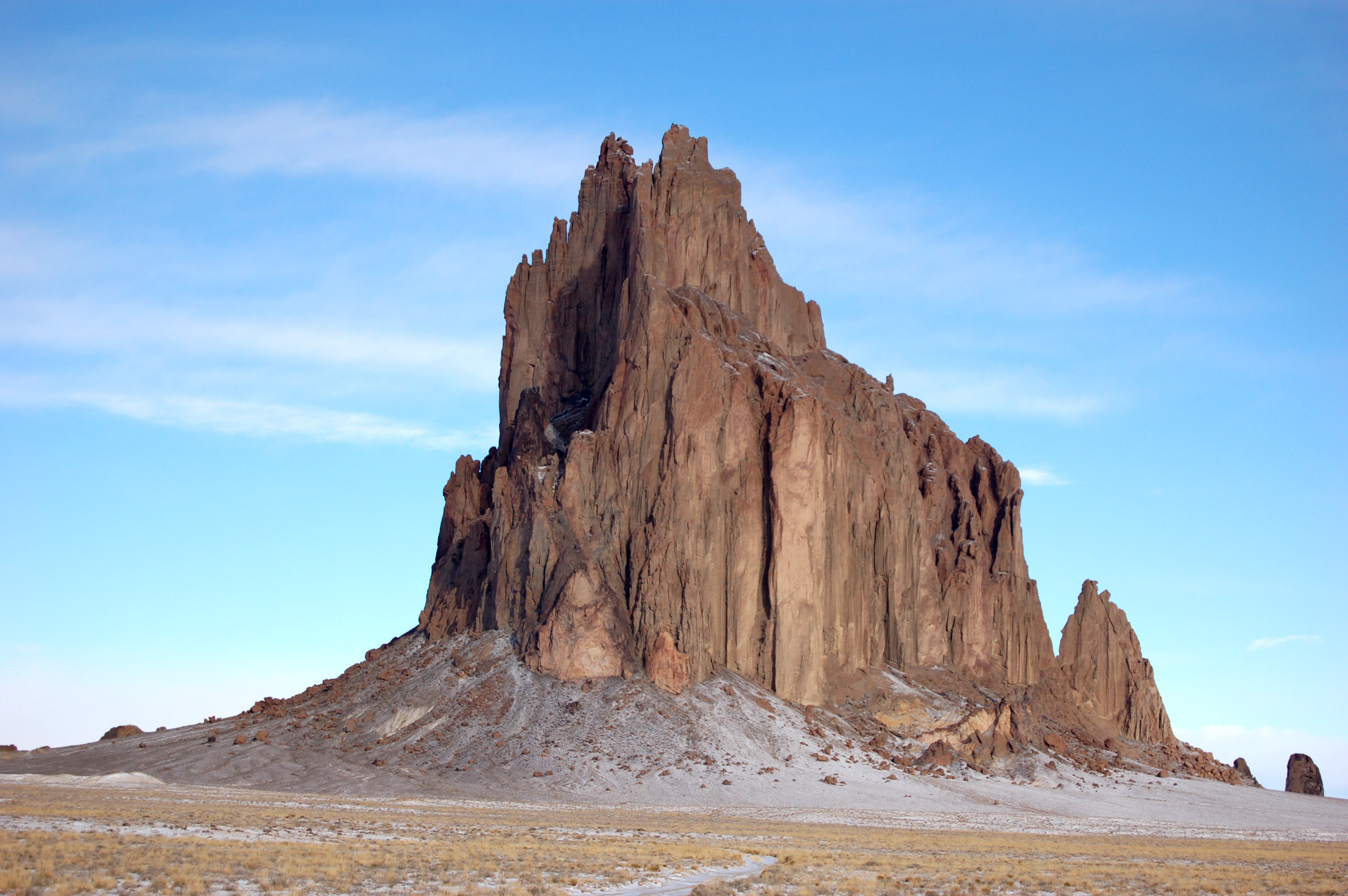
Rising nearly 482.5 m (1,583 ft), Shiprock is a gigantic rock formation found on the high-desert plain of Navajo Nation in San Juan County, New Mexico, USA. Specifically, it is located in the center of the Ancient Pueblo People or Ancestral Puebloan civilization, a prehistoric Native American culture of the Southwest United States. It is named after the town of Shiprock. However, it has local name which means “rock with wings” or “winged rock” in Navajo for the peak refers to the legends of the great bird that brought them from the north to their present lands. It has a peak elevation of 2,187.5 m (7,177 ft) above sea level. (image source)

Devils Tower

Devils Tower is an attraction in the Black Hills near Hulett and Sundance in Crook County, northeastern Wyoming. It has a local name of Mato Tipilai which means “Bear Lodge.” Rising 386 m (1,267 ft) above the surrounding terrain, it is a monolithic igneous intrusion or volcanic neck. Its summit however is 1,558 m (5,112 feet) above sea level. The peak itself forms part only of the Devils Tower National Monument that encloses an area of 1,347 acres (5.45 km2). Currently, the Monument has approximately 400,000 visitors each year with around 1% of it climbing the Devils Tower, mostly through traditional climbing techniques. In 1977, Steven Spielberg used the location in the movie “Close Encounters of the Third Kind.” (image source)

Sugarloaf Mountain

Situated in Rio de Janeiro, Brazil at the mouth of Guanabara Bay on a peninsula facing the Atlantic Ocean, Sugarloaf Mountain is called as “Pão de Açúcar” in Portuguese. Its name refers to its resemblance to the traditional shape of concentrated refined loaf sugar. The mountain rises about 396 m (1,299 ft) above the harbor. Sugarloaf Mountain is only one of several monolithic morros of granite and quartz that stand on the edge of Rio de Janeiro. A glass-paneled cable car connects it to the nearest mountain. In 1979, it was used as one of the setting in the James Bond movie “Moonraker.” (image source)
 
Auyantepui

Auyantepui, which means “Devil’s Mountain” in the language of native Pemon people, is located in the Gran Sabana region in Bolivar State, Venezuela. It is one of the most famous and largest (but not the highest) tepui or table-top mountains in Venezuela, spanning an area of 700 km2. Its peak is 2,535 meters high. It is the location of the world’s highest waterfall, Angel Falls, which drops from a cleft near the summer. The falls are 979 meters (3,212 ft) high, more than 19 times higher than Niagara Falls. Auyantepui is visited on average three times a year. (image source)

Cerro Torre

Located in Patagonia, Chile-Argentina, Cerro Torre is one of the mountains of the Southern Patagonian Ice Field in South America. At 3,128 m (10,262 ft), it is the highest in a four-mountain chain consisting of Torre Egger, Punta Herron, Cerro Stanhardt, and itself. The top of the mountain has a mushroom of frosted ice, formed by the constant strong winds, increasing the difficulty of reaching the actual summit. Cerro Torre was featured in the 1991 film “Scream of Stone” by director Werner Herzog. (image source)

Related Posts Plugin for WordPress, Blogger...